
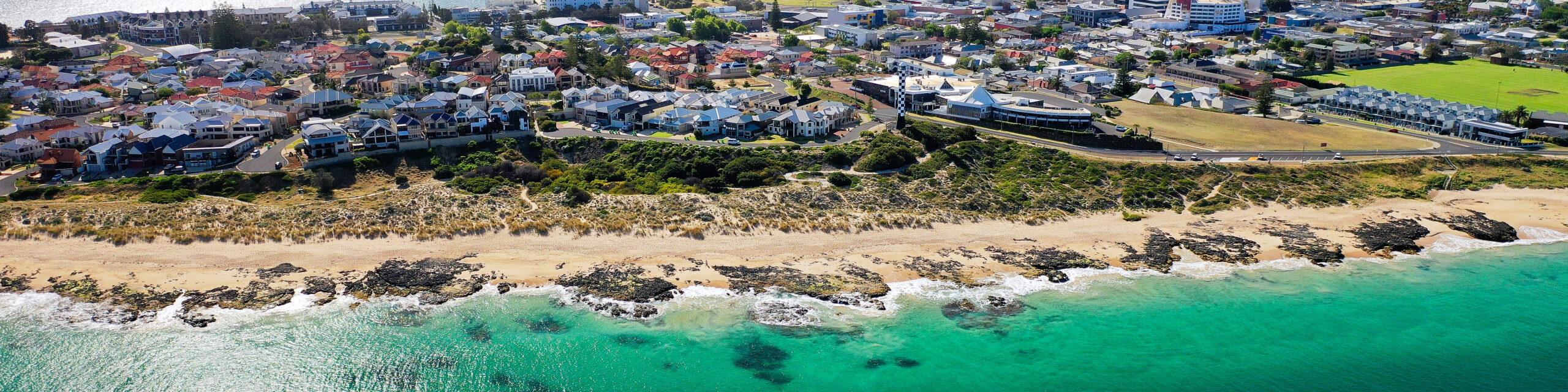
The issues that matter most to our community don't always sit within the City's control. That's why we've identified seven strategic advocacy priorities, focusing our efforts on securing the investment, infrastructure and support needed to help Bunbury thrive.
These priorities were endorsed by Council and are reviewed annually to ensure they continue to reflect community needs and opportunities.
Why we need to advocate
Some of the commitments in the Council Plan, we can go ahead and deliver. Others we can't - not because they aren't priorities, but because funding, approvals, the legislation or the delivery authority may sit with someone else. We may need to collaborate or partner, and sometimes influence, which is where advocacy comes in. Being a voice for our community on key issues is one role Council has formally adopted, alongside facilitating, partnering, funding, providing and regulating, supporting us to focus on our community priorities and achieve the commitments outlined in Council Plan 2026 – 2036.
Got a question about our advocacy priorities? You'll find answers in the FAQs here.
The priorities


The City of Bunbury is advocating for: Support and prioritisation in the forward planning and delivery of essential service infrastructure required for residential growth and commercial development in Bunbury.
Diagnosis: Bunbury’s essential service infrastructure is of priority – without the timely, coordinated provision of these utilities ahead of demand, investment and development are being delayed – constraining ability to support increases in housing and the growth of a designated Seven City and regional service hub.
The City of Bunbury is advocating for: Increased and priority investment in emergency and transitional accommodation, social and affordable housing, and support services for people experiencing or at risk of homelessness in Bunbury.
Diagnosis: Bunbury is experiencing rising rates of homelessness and housing stress. As a regional service hub, the city draws demand from across the South West – demand that now exceeds the capacity of local emergency accommodation, social housing and support services.
The City of Bunbury is advocating for: Funding and investment to support the detailed design and delivery of the Bicentennial Square precinct master plan.
Diagnosis: Bicentennial Square is Bunbury’s central civic space, yet it is underutilised and no longer reflects the standard of a vibrant regional capital. The precinct lacks the design quality, activation, and amenity needed to draw people in, leaving a key part of the City Centre underperforming as a destination and community space.
The City of Bunbury is advocating for: All levels of government and relevant stakeholders to undertake a review of, and provide sustained funding for, the regional assets and services that the City of Bunbury delivers to the wider South West community.
Diagnosis: As a designated “Seven City” and the recognised service hub for the South West, Bunbury is home to a concentration of regional facilities and services relied upon by residents from across the wider region well beyond the city’s own ratepayer base. Sporting, cultural, recreational and community facilities owned and managed by the City of Bunbury are used wider communities, driving higher volumes of use and accelerating the wear on local infrastructure. Without a review and sustained funding that recognises Bunbury’s hub role, the long-term viability of these regional assets and the local ratepayers who carry them will come under increasing strain.
The City of Bunbury is advocating for: State Government to commit further funding for the increased costs in transporting food organics garden organics (FOGO) waste.
Support for the planning, development and licensing of a sustainable Regional Waste Facility servicing Bunbury and the wider South West.
Diagnosis: The South West’s existing waste infrastructure is not currently servicing community needs or supporting a sustainable future. It cannot keep pace with a growing population, expanding industry and rising commercial activity. With no local facility of sufficient scale, waste – such as FOGO – must be transferred long distances at a cost that is rising, inefficient and unsustainable. The region is now facing escalating costs and growing environmental impact.
The City of Bunbury is advocating for: Investment in major events and attractions that enhance the liveability of Bunbury and contribute to tourism and economic growth.
Diagnosis: Bunbury is the cultural and entertainment hub of the South West, yet its events and attractions offering is under-capitalised relative to that role. The assets are already in place at the award-winning Bunbury Regional Entertainment Centre, the largest A-class regional gallery in Western Australia, beautiful waterfronts, the Hay Park Precinct and Hands Oval as examples.
The City of Bunbury is advocating for: Investment in an integrated public transport network for Bunbury, including improved local bus services, innovative vehicle solutions and enhanced connections between the Australind train service and City Centre.
Diagnosis: Bunbury’s public transport network is fragmented, under-utilised and lacks innovation. Local buses are infrequent and poorly aligned to demand – often running during quiet, non-peak periods rather than when demand is highest creating inefficiency. The city lacks the modern transport options residents and visitors expect.
The City advocates every day on behalf of our community – giving a voice to the issues that matter. These formal advocacy topics reflect the priorities our community told us about through the MARKYT® Community Scorecard 2025 and Brighter Together engagement campaign, along with the commitments in the City of Bunbury Council Plan 2026–2036. The advocacy priorities will be formally reviewed annually and reported on six-monthly.
Frequently asked questions
Advocacy means speaking up for our community on the issues that matter – putting Bunbury’s case to State and Federal Government, agencies, industry and regional partners to influence, fund or change something.
Not everything our community needs can be delivered by the City directly. Where the decision, action or funding sits with someone else, advocacy is the tool we have.
No. These are things we’re asking other people to fund, approve, partner, support or deliver. The City’s own program of works sits in the Council Plan 2026–2036 and the annual budget.
We started with the priorities you told us about through Brighter Together and the MARKYT® Community Scorecard in 2025, and the commitments in the Council Plan 2026–2036.
Then we applied one test to the commitments: can the City deliver this with our own budget, workforce and decision-making authority? If it needs funding, approvals, legislative change or partnership held by State or Federal Government or regional stakeholders, that assist in informing advocacy.
Not at all.
The absence of a community priority from this agenda does not mean it’s less important to Council or less of a focus for the City. Endorsing this agenda decides where we direct our formal advocacy effort – it does not rank or reprioritise aspirations.
Usually an issue isn’t listed for one of three reasons:
- We’re already delivering it ourselves, so there’s nothing to ask for
- It’s being progressed through another plan or strategy
- The work isn’t at a stage where an advocacy ask is ready
If something matters to you and you can’t see it reflected anywhere, get in touch – we’d love to hear from you.
Infrastructure and maintenance was one of the top five community priorities, and it’s a major focus in the Council Plan but it’s largely something we fund and deliver ourselves through the annual budget, our asset management plans and available funding streams.
We are focused on Bunbury. But Bunbury is the regional service hub for WA’s South West – the primary centre for healthcare, education, community services, industry and commerce for a catchment far bigger than our own boundaries.
Bunbury ratepayers help pay for assets and services used by people from right across the South West – facilities, venues, roads and services that visitors and neighbouring residents rely on every day.
We’re asking all levels of government to formally review that imbalance and provide sustained funding for the regional-scale role the City plays. In short: recognition and fair funding for the load Bunbury ratepayers carry on the region’s behalf.
Advocacy is delivered within existing City resources and staffing. There’s no separate levy or rate increase attached to this agenda. The intent is the opposite – successful advocacy brings external money into Bunbury for things ratepayers would otherwise have to fund alone or simply go without.
Sometimes it won’t. Funding decisions rest with other governments, and their budgets and priorities shift. That’s precisely why we take a coordinated, evidence-based approach rather than making one-off requests – and why the agenda is reviewed annually, so we can adjust our approach based on what we learn.
The Mayor is the principal spokesperson for Council’s endorsed positions, supported by the CEO, Elected Members and City officers. Advocacy is coordinated across the organisation so we speak with one consistent voice.
No. We advocate for Bunbury’s interests to whoever holds the relevant decision, regardless of which party is in government, and we maintain relationships across. During election caretaker periods, specific restrictions apply to Council advocacy.
The agenda is formally reviewed annually. Council can amend it during the year if circumstances change significantly – a new funding program opening, or a major opportunity or risk emerging.
We’ll report back. Council monitors progress every six months and reports publicly each year, and we’ll publish updates against each priority as they progress – including what we asked for, who we asked, and what happened.